




course | Pneumatic Control System Maintenance & Troubleshooting
Looking to excel in pneumatic control system maintenance troubleshooting? Pneumatic Control System Maintenance & Troubleshooting in Dubai offers applied tools,
ICC-1217 | Pneumatic Control System Maintenance & Troubleshooting
Course Sector : Instrumentation & Controls

| Duration | Date from | Date to | Course Venue | Course fees | Book a course |
|---|---|---|---|---|---|
| 5 Days | 09/11/2026 | 13/11/2026 | Abu Dhabi | $4,250 | Book now |
| 5 Days | 15/03/2027 | 19/03/2027 | Dubai | $4,250 | Book now |
| 5 Days | 05/07/2027 | 09/07/2027 | London | $4,950 | Book now |
| 5 Days | 20/09/2027 | 24/09/2027 | Dubai | $4,250 | Book now |
Course Introduction
This program trains participants in the theory of pneumatic instrumentation and the principles of operation, characteristics, and capabilities of components typically found in pneumatic control loops.
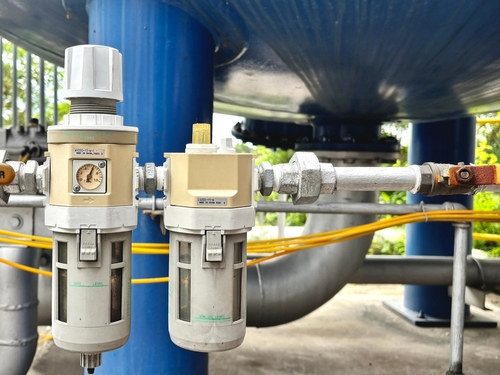
This course introduces the principles of pneumatic instrument operation, and the terms force, pressure, and compressibility are defined. The operation of pneumatic air supply system components, including compressors, dryers, filters, and regulators, is explained. System maintenance and testing are also taught. Filter cartridge replacement and regulator maintenance are demonstrated.
Pneumatic transmitters
This course describes the features and operation of sensors used in pneumatic instruments, including Bourdon tubes, filled bulbs, diaphragm capsules, and bellows. It teaches how both force and motion-balance pneumatic transmitters operate and how transmitter components, such as flapper/nozzles, relays, and restrictors, are cleaned and maintained.
This course focuses on the operation and maintenance of pneumatic controllers and recorders. The lesson teaches how the bellows, relays, links, and levers within a controller are configured to provide proportional, integral, and derivative control modes, both in direct and reverse action. Common maintenance practices are covered, including relay and restrictor cleaning and replacement, along with controller and recorder calibration.
Course objective
- Define force as it applies to pneumatics
- Define pressure as it applies to pneumatics
- Define compressibility as it applies to pneumatics
- Discuss how and why pneumatics are used in the industry
- Describe why pneumatic instruments have a limited transmission distance
- Describe the purpose and operation of a booster
- List the effects of contaminants on a pneumatic system
- Check the operation of an air dryer
- Identify the parts of a regulator, adjust output pressure on a regulator, and maintain a regulator
- State four common sensing elements used in pneumatic instruments
- Identify the nozzle/flapper, relay, feedback element, and restrictor in a pneumatic instrument
- Explain the operation of a basic pneumatic instrument
- Interpret a manufacturer's schematic drawing of a pneumatic transmitter to describe its principle of operation and the location of parts
- List possible causes for a pneumatic transmitter to erroneously produce full output
- Describe the function of a controller
- Identify common components found in a controller and state the function of each
- Review proportional, integral, and derivative control modes
- Describe an appropriate application for each of the control modes
- List possible malfunctions in a controller and the probable causes
- Check the operation of a controller
- Align and calibrate a proportional-plus-reset controller
- Identify the components of a pneumatic recorder
- Disassemble and clean a pneumatic recorder
Course audience
- Control & Instrumentation Engineer
- Controls Technologist
- Instrumentation Technician / Systems Control Tech
- Senior Control & Instrumentation Engineer
- Maintaining Equipment Engineer
- Facilities I&E / Controls Engineer
- Offshore Instrumentation Engineer
Course Outline | 01 Day One
Chapter 1: Pneumatic Device Operation
- Pneumatic Signal Transmission
- Transmission System Response
- Instrument Air System
- Supply Pressure & Instrument Signals
- Instrument Air System
- Instrument Air Supply
- Bourdon Pressure Gage
- Bellows-Type Pressure Elements
- Basic Diaphragm
- Flapper / Nozzle or Baffle / Nozzle
- Pneumatic Relay Schematic
- Pneumatic Transmitters
- Motion Balance Transmitter
- Pneumatic Temperature Transmitter
- Single Process Alarm
- Dual Process Alarm
- Deviation Process Alarm
Chapter 2: Instrument Performance
- Unit Systems - Instrumentation
- Relationship between Pressure Terms
- Specific Gravity
- Range and Span
- Suppressed and Elevated Zero Range
- Range and Span Terminology
- Accuracy
- Repeatability
- Linearity
- Conformity
- Hysteresis and Dead Band
- Performance Specifications
- Instrument devices Errors
Course Outline | 02 Day Two
Chapter 3: Pneumatic Instruments Calibration
- Calibration Block Diagram
- Hydraulic Dead Weight Tester
- U-Tube Manometers
- Schematic of Pneumatic Calibrator
- Electro-pneumatic Calibrator
- Hierarchy of Standards
- Five-Point Calibration
- Calibration Chart
- In-Shop or Field Calibration
Chapter 4: D/P Level Applications
- Hydrostatic Head Level Measurement
- Direct Connect Level Transmitter
- Open Tank Installation
- Closed Tank Installation, Dry Leg
- Closed Tank Installation, Wet Leg
- Remote Seals, Liquid, Closed Tank
- Bubbler Tube Level Measurement
- Liquid/Liquid Interface Measurement
- Density Measurement - Bubbler
Chapter 5: Control Modes Review
- On/Off Mode
- Differential Gap Operation
- Controller Modes - Proportional Band
- Controller Modes - Proportional Gain
- Proportional Response Units
- Proportional Band vs. Proportional Gain
- Proportional Only Control
- Offset
- Reset Response (Integral)
- Derivative Response
- Controller Modes and Their Uses
- Controller Action
Course Outline | 03 Day Three
Chapter 6: Feedback Controllers
- Proportional Mechanism
- Proportional + Reset
- Proportional + Reset + Derivative
- 2-Mode Stacked Diaphragm Controller
- 3-Mode Stacked Diaphragm Controller
Chapter 7: Other Pneumatic Units
- Auto to Manual Switching
- Derivative Response to Step Change
- Inverse Derivative Unit
- Pneumatic Analog Computer
- Connections for Dividing
- Pneumatic Adder/Subtractor
- Flow Rate vs. Differential Pressure
- Pneumatic Square Root Extractor
- Low-Pressure Selector
- High-Pressure Selector
- Constant Differential Relay
Course Outline | 04 Day Four
Chapter 8: Control Valve Types
- Typical Control Valve
- Single Ported Globe Valve
- Double Ported Globe Valve
- Diaphragm Valve
- Pinch Valve
- Angle Body
- Three-Way Bodies
- Typical Ball Valve
- Typical Ball Valves
- Segmented Ball Valve
- V-Notched Ball
- Butterfly Valve
- Rising Stem vs. Rotary
- Pressure Regulators
- Direct Operated Regulators
- Piloted Regulators
- Sanitary Regulators
- Sizing
Chapter 9: Actuators
- Spring Diaphragm Actuator
- Direct/reverse actuator
- Failure Direction
- Diaphragm Actuators
- Spring-Opposed Diaphragm Actuators
- A & D
- Single Acting Piston Actuators
- Double-Acting Piston Actuators
- Pneumatic Piston Actuators - A & D
- Stroking Actuators
- Forces in Linear Valves • Forces in Rotary Valves
Course Outline | 05 Day Five
Chapter 10: Positioners
- Principles of Operation
- Single Acting Positioner
- Measures of Loop Response
- Positioner Added to Flow Control Loop
- Positioner Added to Temperature Loop
- Fast Systems
- Double-Acting Cylinder
- Volume Booster
- Double Acting Positioner
- Other Accessories
Chapter 11: Valve Characteristics
- Inherent Flow Characteristics
- Globe Valve Plugs
- Typical Installed Flow Characteristics
- Pressure Drop across the Valve
- Overview of Valve Sizing
- Valve Selection - Performance
- Valve Selection - Installation
- Valve Selection - Maintainability
- Final Control Element - Split Ranging
- Application of Common Trim Materials
- Control Valve Tight Shut Off
- Bolted Packing Box Assembly
- Valve Packing Materials
- Bench Set / Bench Range
BOOST’s Professional Attendance Certificate “BPAC”
BPAC is always given to the delegates after completing the training course,and depends on their attendance of the program at a rate of no less than 80%,besides their active participation and engagement during the program sessions.


Since 2001, we’ve been at the forefront of professional training in the Middle East — shaping the future of learning and development one success story at a time. With a vision rooted in innovation and excellence, we help individuals, teams, and organizations reach their highest potential through integrated, future-ready training solutions. Our comprehensive programs combine global best practices with local insights, empowering people to grow, lead, and make a lasting impact in their industries.

🔗 Quick Links


Sister Companies to Boost Consulting and Training
most trending
And Recommended Training Courses
We believe in progress for everyone.
We helped more than 10,000 clients over 20 countries on 4 continents in boosting their knowledge, skills, and careers.

Boost Training And Consulting All Copyrights Reserved 2026